It’s Time to Make Electricity Affordable & Reliable
Massachusetts families pay some of the highest energy prices in America. But that doesn’t have to be the case – relief is possible.
Energy Costs are on the Rise.
Corporations Profit While You Pay the Price.
Massachusetts pays
3rd highest
for electricity costs nationwide. Families here pay some of the steepest rates in America.
Your electricity costs have
increased by 3x
since the 1990s. That’s far faster than inflation.
Residential gas and electric customers in Massachusetts owed over
$832 million
in past due bills as of September 2024.
Why is Energy So Expensive?
Existing systems are outdated. Over
70% of U.S. energy
transmission infrastructure is past the midpoint of its 50-year life expectancy. We need a resilient grid that can handle demand surges.
Electricity is most expensive during
peak demand hours
Anything from extreme weather conditions to the simple time of day can drive up costs per kilowatt-hour.
Here’s Good News.
Communities in New England are Fighting Against Rising Energy Costs.

Batteries and small scale solar saved New England customers
$20 million
in just a few days during a heat wave in late June 2025.*
50%+
of Massachusetts residents
trust battery energy storage systems to protect against blackouts and manage costs.
57%
of Massachusetts communities
say energy storage keeps essential services running during outages.
Massachusetts has committed to deploying over
5,000 MWh
of energy storage by 2030.
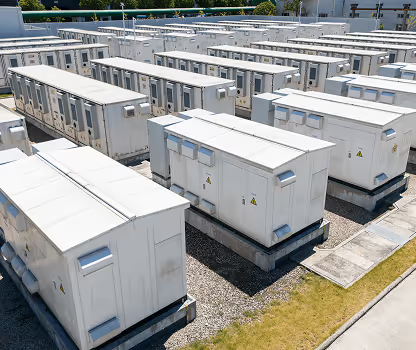
A Different Solution
What are Battery Energy Storage Systems?
Battery energy storage systems (BESS) capture surplus electricity from the energy grid or from renewable sources like solar, and store it for later use. During periods of high demand or loss of power generation, that stored power steps in—keeping homes, schools, and essential services running without interruption. For residents, that can mean fewer blackouts and a stronger, more secure energy future.
Helping American Communities
Avoid Cost Spikes during Peak Demand
Electricity is most expensive when demand is at its peak – think late afternoon during a summer heatwave. During one of the hottest days last summer, solar power and energy storage played a critical role in keeping power flowing to our homes and businesses – saving an estimated $20 million in energy costs!
Energy storage can amplify those savings and add resilience when we need it most. If New England had an additional 5,000 megawatts of energy storage at the ready – roughly 20 large-scale battery projects – it could have powered about 1.2 million homes for four hours during periods of the greatest strain on our energy infrastructure. That much more storage would have reduced energy prices by roughly 10% during the heatwave.
More battery storage creates a more efficient grid and enables more clean, abundant power from wind and the sun.
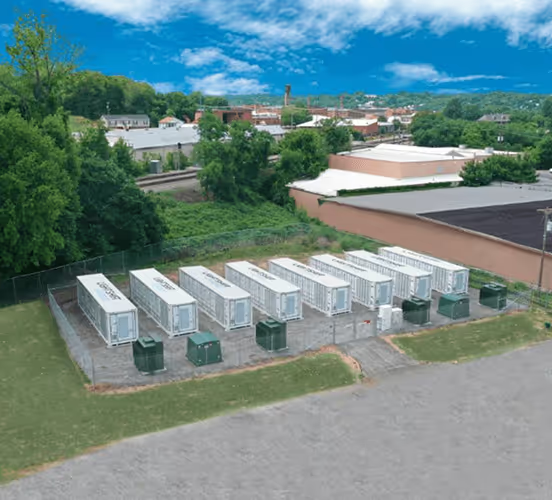
The American Energy Project
Helps Families Keep the Lights On, and the Bills Down

Batteries store cheap, abundant energy to be deployed when energy demand is highest – just when folks are coming home to make dinner or adjust their thermostat.
We need more home-grown energy, and battery storage paired with solar power can help keep the lights on and reduce price spikes.

When storage facilities are built near critical infrastructure or in high-demand areas, it can lessen the strain on the power grid, reducing outages.
Many communities are working to provide battery backup to critical infrastructure like emergency shelters and schools, and some cities are turning to battery systems to replace traditional fossil fuels.

For too long, energy costs have been out of control – with families stuck paying the price. Massachusetts is already leveraging battery energy storage to help control energy costs and allow us to be more energy independent.
Around 50% of Northeast households believe battery storage reduces costs and improves reliability. We help put American energy front and center – and money back in your pocket.
Community Benefits
What can a project like this mean for your town?
Schools and local services
New revenue can support school budgets, facility improvements, and core municipal services – helping towns plan for the long term.
Infrastructure and public works
Revenue can help fund road repairs and local infrastructure projects that often compete for limited budgets.
How Are Americans Taking Back Control of Their Power?
Join the Conversation
Parents. Veterans. Business Owners. Neighbors. All standing up for affordable, reliable clean energy resources like battery storage that can keep more of our energy dollars here at home.
Massachusetts Spotlight
American Energy. American Strength.
Curious How It All Works?
Frequently Asked Questions
Quick answers to common questions about battery storage and it’s role in America's energy future.
Show Your Support
Join the Movement for More Affordable Energy
We deserve power that’s affordable, homegrown and always accessible. Make your voice heard and stand with families fighting for a fair and strong America.
Dear Legislator,
I am writing to express my support for battery energy storage systems in our communities across Massachusetts. These projects are essential infrastructure that will strengthen our electric grid, reduce costs for ratepayers and help the state achieve its clean energy and climate goals.
Battery storage is a proven and safe technology. More than 100 storage facilities already operate successfully throughout Massachusetts, providing reliable, low-cost energy to homes and businesses. By storing clean electricity when it is abundant and releasing it during times of high demand, these systems reduce our reliance on expensive and polluting gas sources – cutting emissions, improving air quality and lowering electricity prices.
Energy storage projects in Massachusetts must meet rigorous state and national safety standards, including comprehensive fire-suppression measures, 24/7 monitoring, and detailed emergency response planning. Developers work closely with local fire departments and first responders to ensure proper training and transparency throughout the siting, construction, and operational phases. This level of oversight has made Massachusetts a national leader in safe, responsible storage deployment.
In addition to delivering statewide grid benefits, battery storage projects frequently provide important local advantages, such as:
- Generating new municipal tax revenue without burdening residents
- Revitalizing underutilized or previously contaminated land
- Supporting local jobs during construction and ongoing operations
- Improving community resilience by helping prevent outages and stabilizing the grid
As Massachusetts moves toward an energy system powered increasingly by renewable resources, storage is indispensable. It enables the state to capture the full value of clean energy investments, maintain system reliability and protect consumers from volatile energy prices.
For these reasons, I urge you to continue supporting policies and permitting processes that enable the responsible development of battery storage in Massachusetts. This technology is safe, forward-looking, and essential to building a cleaner, more resilient, and more affordable energy future for our state.
Sincerely,
[Your information here]